Minimum Order Quantity
100
Detailed Description
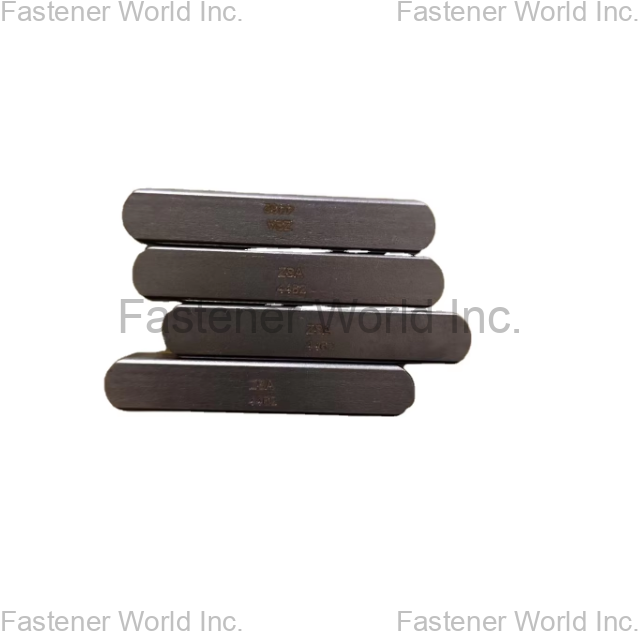
2205 is the most widely used duplex stainless steel (DSS), with UNS numbers S32205/S31803, German standard 1.4462, and American standard F51. It consists of approximately 50% ferrite + 50% austenite duplex structure, combining high strength and excellent corrosion resistance. Its yield strength is about twice that of 316L, and its resistance to chloride pitting corrosion/stress corrosion is significantly better than that of 316L. It is widely used in strong corrosion environments such as chemical industry, oil and gas, and marine applications.
I. Core Chemical Composition (Typical, wt%)
Element Content Function
Chromium (Cr) 22.0–23.0 Forms a passive film, improving resistance to uniform/local corrosion
Nickel (Ni) 4.5–6.5 Stabilizes the austenitic phase, ensuring toughness and weldability
Molybdenum (Mo) 2.5–3.5 Enhances resistance to pitting/crevice corrosion, increases PREN
Nitrogen (N) 0.14–0.20 Strengthens the duplex structure, improves strength and corrosion resistance
Carbon (C) ≤0.03 Reduces the risk of intergranular corrosion
Iron (Fe) Balance Matrix element
PREN (Pitting Resistance Equivalent Number) ≈ 32–38, much higher than that of 316L (≈25), showing excellent resistance to pitting/crevice corrosion.
II. Key Properties (Annealed state, typical values)
Property Category Index Description
Mechanical Properties Tensile strength ≥ 620MPa; Yield strength ≥ 450MPa; Elongation ≥ 25% The yield strength is more than twice that of 316L, enabling wall thickness reduction for cost and weight reduction
Corrosion Resistance Resistant to chloride pitting, crevice corrosion, stress corrosion cracking (SCC) Better than 316L, suitable for seawater and chlorine-containing chemical media
Physical Properties Thermal conductivity ≈ 19 W/(m・K); Thermal expansion coefficient ≈ 13.1×10^-6/°C Higher thermal conductivity than austenitic steel, thermal expansion coefficient close to carbon steel, facilitating composite use
Service Temperature -50°C to 300°C (long-term recommended ≤ 250°C) Avoids high-temperature σ/χ phase precipitation and embrittlement, with good low-temperature toughness
Weldability Good Need to control heat input (≤2.5 kJ/mm